Showing posts with label Observation. Show all posts

Wednesday, August 26, 2026

A Street by Any Other Name Still Spells Home

What’s in a Street Name?


Some streets hold more than pavement and addresses. They hold the first footsteps of people who had just crossed an ocean, the smell of simmering tomato sauce and frying garlic drifting from open windows, the sharp cry of a street vendor, the soft clatter of wooden pushcarts on cobblestones. Mulberry Street in New York City and Taylor Street in Chicago were two such places. For hundreds of Italian immigrants—and for my own family—they were the closest thing to home that the New World would ever offer.

My great-grandfather Fedele Poppa 
lived at 114-118 Mulberry Street in NY, c 1906-1910
before settling in Bridgeport, CT

Neither street began as a place of wealth or prestige. Both were crowded, working-class neighborhoods that outsiders often looked down on. Yet within their own borders they became something stronger: Little Italys, insulated by language, custom, mutual-aid societies, and the simple
fact that almost everyone understood what it meant to have left everything behind. On summer evenings the air itself seemed Italian—thick with the scent of basil, espresso, and laundry hung between tenement windows.

New York was the great doorway. In the nineteenth century most immigrants stepped ashore at Castle Garden; after 1892 the processing moved to Ellis Island, which stayed open until 1954. Once the inspectors finished their work, many Italians walked straight to Mulberry Street. That short stretch of Lower Manhattan was the heart of the city’s Italian colony during the late 1800s and early 1900s. 

My great-grandfather, my grandfather, and my great-uncles were among them. They lived for a time in tenements, one at 62 Mulberry Street and two others at 114–118 Mulberry Street—buildings that no longer exist. 

I can almost picture the narrow stairwells, the shared hallways that smelled of coal smoke and cooking, the single window that looked out onto a fire escape crowded with geraniums and drying clothes. One lot later became a parking area, and by 2019 the others had been rebuilt yet again into mixed-use structures with luxury apartments. The place where so many families first “parked” while they found their footing has been transformed more than once, as if the city itself kept rewriting the story.

My grandfather, Isidoro Poppa
lived at 114-118 Mulberry St in NY,
then Bridgeport, CT and later,
 at 2160 DeKalb St in Chicago, c. 1920
At its largest, the Italian district ran roughly from Worth Street south to Houston Street north, and from Lafayette Street west to the Bowery east. Today only a few blocks of Mulberry Street still carry the name and the feeling of Little Italy. 


The neighborhood began as Mulberry Bend, a densely packed section once described as “the foul core of New York’s slums” by the reformer and photographer Jacob Riis. In those years the street pulsed with life: the constant murmur of southern Italian dialects, the rattle of wagons, the high-pitched calls of children playing in the gutters. Mass immigration from Italy in the 1880s filled the area with families, pushcarts, and storefronts.

After World War II many residents moved outward to Brooklyn, Staten Island, and New Jersey. When immigration rules loosened in 1965, neighboring Chinatown expanded northward. In 2010 the combined Chinatown and Little Italy area was listed as a historic district on the National Register of Historic Places—recognition that arrived long after most of the original families had moved on.


My great-grandfather Leonardo DiFoggia
 lived at 62 Mulberry St in NY
 and later in Chicago, c. 1906/1910

In Chicago the same story unfolded along Taylor Street. That corridor became the main gathering place for the city’s Italian immigrants and the neighborhood most often called Little Italy. It sits inside the larger Near West Side, a district that at the turn of the twentieth century also held sizable Greek and Jewish communities. Over time most of those other groups moved away, leaving a strong Italian presence that lasted for decades. 

On market days the sidewalks smelled of fresh bread, sharp cheese, and the sweet, yeasty air that poured from bakery doorways. Men stood outside social clubs arguing politics in the old language; women leaned from windows to call children home for supper. 


The air itself seemed to carry the neighborhood's pulse—garlic and basil drifting from open kitchens, the rattle of pushcarts, the quick laughter of kids darting between stoops.


Many Italians first arrived in Chicago in small numbers in the 1850s. By 1880 the city counted 1,357 Italian residents. Immigration accelerated sharply in the decades that followed; the foreign-born Italian population rose from roughly 16,000 in 1900 to a peak of nearly 74,000 in 1930. The Taylor Street area held the largest concentration. By the late 1920s Italian-owned businesses—hundreds of grocery stores, restaurants, and pastry shops—had become a familiar part of Chicago’s food landscape and helped introduce Italian cooking to the wider city. The scent of cannoli frying in hot oil, the gleam of polished espresso machines, the soft thud of dough being kneaded—these became part of the neighborhood’s everyday music.


The Italian population on Taylor Street reached its height in the 1950s and early 1960s. After the University of Illinois decided to locate a campus in the neighborhood in 1963, the residential community began to shrink. Blocks that had once held dense rows of flats and storefronts gave way to new institutional buildings, and many families dispersed. A number of long-standing Italian restaurants and shops still line the corridor today, carrying the memory of what was once a denser, louder, more tightly knit world.

I never lived on Taylor Street or in the surrounding Tri-Taylor, University Village, or Maxwell Street areas. My grandparents, parents, aunts, uncles, and a few cousins did, so I claim a connection through family. The stories I grew up hearing mixed hardship with warmth: the Spanish Influenza, the Depression, scarce jobs, many mouths to feed, two World Wars, Korea, and Vietnam. Yet they also spoke of closeness among relatives and neighbors—of kitchens that always seemed full, of the comfort of hearing the same dialect on every corner, of pride in the community and in Italian heritage. Those feelings still surface whenever those who were there share their memories. Not a bad thing.

What’s in a street name? Sometimes an entire beginning. Sometimes the only home a family would know for a generation. And sometimes, if you’re lucky, a handful of stories that still carry the smell of sauce and the sound of laughter long after the tenements are gone.


Grandma Poppa and Family on DeKalb Street - July 15, 1951


Citations for direct quotes and specific facts

  • Jacob Riis quotation (“the foul core of New York’s slums”): from his writings on Mulberry Bend, commonly referenced in historical accounts of the neighborhood (including How the Other Half Lives and later summaries).
  • Former boundaries of Manhattan’s Little Italy and the reduction to roughly three blocks: standard historical description drawn from accounts of the neighborhood’s extent.
  • Castle Garden (19th century) and Ellis Island (1892–1954) as the main processing centers: widely documented immigration history.
  • Chicago Italian population figures (1,357 in 1880; approx. 16,000 foreign-born in 1900; peak of nearly 74,000 in 1930): from historical demographic records summarized in sources such as the Encyclopedia of Chicago and related scholarship.
  • 1927 business counts (hundreds of Italian-owned grocery stores, restaurants, and pastry shops): drawn from period economic surveys of Italian neighborhoods in Chicago.
  • Peak Italian population on Taylor Street in the 1950s–early 1960s and the impact of the 1963 University of Illinois campus decision: standard local historical narrative.
  • 2010 National Register listing of the Chinatown and Little Italy historic district: official designation.


Thursday, August 6, 2020

SWEET HOME CHICAGO...

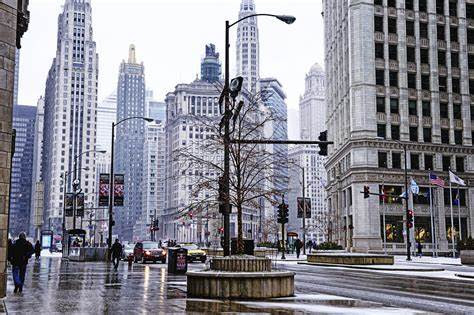
The Windy City. The City of the Big Shoulders or City of Broad Shoulders. Hog Butcher for the World.[1] All nicknames for a sprawling metropolis that has bragging rights to an incredible skyline that overlooks Lake Michigan. A magnificent mile for shopping that lights up like the most beautiful Christmas trees you’ve ever seen. Theatres, restaurants, and sports for all seasons. There have been poems, plays, movies, and songs written about it, and of course, who could forget about that lovely cow that kicked over the lantern and burned it all down?


The Second City (or Third City depending on whose being quoted) is not without its share of problems. There are darker sides to this city that I wish didn’t exist, but given its sheer size and population, that’s to be expected. Chicago is definitely known for its weather, both good and bad, but that’s okay. It’ll change in a minute or two. Anyway, it’s where I was born, and will always be known to me as sweet home Chicago. It’s my kind of town.    


Springtime in Chicago


Chicago's Lake Shore Drive - In the Summertime


Autumn in Grant Park - Chicago


Winter Walks in the City


Christmastime at Chicago's Water Tower 


Elevated Train aka the "L" - Leaving the City


[1] Words and Their Stories: Nicknames for Chicago. https://learningenglish.voanews.com/a/a-23-2010-01-08-voa1-84659357/118644.html


Monday, May 25, 2020

LIFE BEHIND A FACE MASK...

The world, as we know, is not the same as it was a year ago. Picking up a couple of items at the grocery store on a whim or stopping off to grab some takeout comes with a hefty price in recent days, and I don't mean dollars spent. 

Many years from now, future genealogists and family historians will look at the events, which transpired within just three months of the start of this new decade. The impeachment and subsequent trial of a president, and the COVID-19 epidemic. 

This Photo by Unknown Author is licensed under CC BY-SA


How will history remember these events or how we reacted to them? Will they be examined in the same way that we scrutinized what our country lived through during the 1973 Watergate hearings? Worse still what our ancestors endured during the 1918 Spanish Influenza pandemic? 

Clip Art Courtesy of PopHistory.com


The United States withstood the stigma and scandal associated with the downfall of a president back in the 70s. Watergate is now a mere footnote in American history to those not yet born at the time of the break-in. 

The world was left with deep scars from the effects of the Spanish Influenza more than 100 years ago... leaving almost no family untouched, and yet we ultimately survived that, too.   

Clip Art Courtesy of Chipublib.org


The uncertainties of 2020, and the outcome of the latest events that we are facing not only as individuals or a nation, but as the world... is still being written and leaves me with a certain amount of apprehension. My logical self tells me that everything will work itself out because it always does. Only time will tell what the future holds for this crazy world in which we live. 

As uncertain as things seem at times, we will get through it and be stronger, and hopefully smarter for it. Until then... I think we all need to be a little kinder and more considerate of each other, and especially of those individuals that are weaker and less fortunate than ourselves.

Meantime, maybe I should take a quick jog around the block...wearing my face mask, of course. It certainly won't hurt to take advantage of this downtime to lose a few pounds. Nah, who am I kidding? Instead, I'll take a deep breath, grab a good book, or binge-watch Outlander on television and relax. A little aromatherapy might be nice, or a cup of hot herbal tea and a scone... better make it more than one. 


Clip Art Courtesy of Clipground.com


Monday, April 27, 2020

WHERE THERE'S A WILL...


I've been spending the last couple of months organizing and sorting through some of my clutter. I'm not proud of it, but I've discovered what a hoarder I've become through this process. Don't get me wrong, I'm not enough of a hoarder to be the subject of a television show or worthy of a news story. Nor is there a need to wear a hazmat suit to walk through my house... but still, a hoarder just the same.

This Is Not My House!!
One of my favorite hobbies is genealogy. Anyone that has ever dabbled in this science knows that the accumulation of documents, photographs, memorabilia, and books is part of the fun of it. Organizing and cataloging these items requires a will of iron, and can take months or weeks. If you've been researching your family tree long enough, …it can take years. If you have multiple interests, such as collecting antiques, books, or crafting…your "clutter" will be multiplied tenfold. Add on top of all that, the day-to-day junk that we accumulate, and you've got yourself quite a mess.


My catharsis began by ridding myself of paper...lots of it. Old magazines with articles that I will never read or ideas I will never try. Stacks of junk mail, statements for accounts I no longer own, recipes that I will never make...you get the point. Papers were coming out of every orifice of my home. It's been driving me crazy for quite a while.


I decided to grab the bull by the horns so to speak, and try the Marie Kondo philosophy of getting rid of those things that no longer give me joy. So far, I have filled three tall kitchen bags with the shredded remains of the joyless paper stacks, and there is enough shredding left to fill another 3-4. The problem is that instead of holding on to paper, I now copy and save links to the articles & various websites. The snowball effect of that is...I forget I have the hyperlink, and now instead of physical clutter...I have a lot of 'cyber clutter.' On the bright side... now at least it is only visible to me...on my phone, iPad, and laptop. It's like shoving everything into a room, and shutting the door when guests are on their way over. I've never done that mind you, but I've heard some people do. Somehow, I don't think that is what Marie Kondo had in mind.

I will probably never become a minimalist, but I must admit throwing stuff out, giving it away, or shredding it into a million pieces can be very therapeutic. I've been putting together a game plan on how to approach the rest of my stuff...books, craft materials, and other miscellaneous dust collectors. My problem is...I like my stuff! I don't know if any of it 'gives me joy' exactly...but it does give me comfort.


Organizing my home is long overdue. It is one of my resolutions for this year. Sadly, it is a resolution I make every year... along with going on a diet and exercising. This time I mean it! It may take me the rest of the year, however, but I'm bound and determined to get it done!! After all, where there's a will... there is a way. Right? As for going on a diet and exercise... baby steps.


RESOURCES:
http://clipart-library.com/
https://konmari.com/


Monday, April 20, 2020

LANDING THE SECOND PUNCH...


When you lob an insult, it's bound to land somewhere. Since you can't hurt feelings of an inanimate object… it's safe to assume that the lobbed insult will land on a person. One can only hope that the recipient has thick enough skin to cushion the blow, and if not, …here's hoping you can run really fast!

The story I'm about to relate may not be one that you might typically find on a genealogy blog or a history blog for that matter. It is, however, a part of my personal history, and so I'm qualifying it as a family story.

 If ignorance is bliss, then I ran into one of the happiest people on earth several months ago. Let me say that I do not dress up on the weekends to run errands. On this particular morning, I went to the hardware store to pick up a couple of those 3M removable hangers. I thought I looked particularly chic that morning, [said with a shrug]. In my standard weekend attire of jeans, a t-shirt, sneakers, and no makeup, I bumped into this woman that I had worked with a couple of years ago. She always seemed to be a pleasant individual, and so when she approached me in the store, I greeted her with a friendly smile and said, 'hello.' Her response to me was slightly less social when she said, 'hi, you know you should never leave the house without makeup' and proceeded to walk away. I was somewhat taken aback. The unsolicited comment from someone who didn't exactly look like a page out of Vogue magazine either, [and for the record, never did] was rude and insulting. 
  
I admit that my tongue has always been a little sharp, but I generally do not go out of my way to hurt a person's feelings, because I'm not too fond of it when it happens to me. It serves no purpose. That doesn't mean that I don't mutter under my breath or make snarky comments while being gossipy with a friend. After all, I'm not a saint, but I try to keep it to a minimum and, at the very least, not do it in public. So, shortly after the verbal vomit that I had just been subjected to...I found myself following behind for a few steps and plotting what I would say to my former coworker in response. 

As we were both approaching the exit, the moment arrived. In a clear, unemotional voice, I snapped back ...' well, you may be right about my appearance but, at least when I put makeup on...I know how to do it. Would you like me to help you with yours?' I left her standing there with a slightly stunned expression on her face as I continued to walk out of the store.  


I will never understand anyone that thinks it is okay to insult, belittle, or try to embarrass another human being, all in the name of "constructive criticism." When the shoe is on the other foot, however, and the "critic" becomes the target of the negative remarks, they are often astonished or incensed. I'm sure when she told her family and friends about the incident, she was the innocent victim, and I was the instigator. I will say that it was not one of my proudest moments, and I hate that she reduced me to her level of ignorance, but it did feel good to give back as good as I got for once.  


Maybe the moral of this story ended up being...never mess with a woman wearing jeans, a t-shirt, sneakers, and no makeup! I would have much preferred...treat others the way you want to be treated...with kindness and respect. Maybe next time.


RESOURCES:
https://www.fotosearch.com/clip-art/


Monday, April 13, 2020

TAKE A DEEP BREATH...

     Other than the obvious definition for the word air, it can also be defined as a way to express, vent, utter, voice, or broach. To make known what one thinks or feels. An impulse to reveal in words, gestures, actions, or what one creates or produces.[i]

     I was ‘up in the air’ on how to approach this week’s post. Do I take the word literally and write about oxygen? I can point out the fact that you can’t live without it. Or, sometimes, when it’s humid outside, the air is so thick, you can cut it with a knife. 

     Maybe I should write about the time I broke up with an old boyfriend over the phone because he made a promise and didn’t keep it. That was a deal-breaker for me. When he tried to call a week or so later, acting like nothing happened, I hung up the phone. I guess you could call that ‘giving someone the air.’ 

     What about a cute little story about the pair of socks that go into the dryer, and somehow only one comes out? The other one seems to disappear ‘into thin air’ or does it? I suspect there is a parallel universe out there that has a multitude of single socks, wondering what happened to their mates.

     A story on one of my ancestors, a great aviator with many adventures while soaring through the air, could be interesting. The problem is, I don’t have any aviators in my family and so no adventures to write about. Or... I could write about a hot air balloon ride, except I’ve never been on one, so I have no point of reference...  

     Who would have thought that a word representing something that comes as naturally to every healthy human being as breathing in and out, would be so challenging to write about?  I may need to sit back, take a deep breath, and let the air clear before I tackle this one.


Monday, April 6, 2020

FIRE!

If you have a fire in your belly, you might have an unyielding determination to succeed. To light a fire under someone is to encourage that person or persons to take action. Whatever the word means to you, it's clear that fire is powerful. 

"You're fired!" A phrase you never want to hear shouted at you during your working career. "Fire!" A word that you never want to hear shouted in a crowded building. Two different meanings, both harmful. The definition of the first one is a burning mass of negative energy exhibited by your boss (just kidding), and the definition of the second one is 'a burning mass of material.' [i]

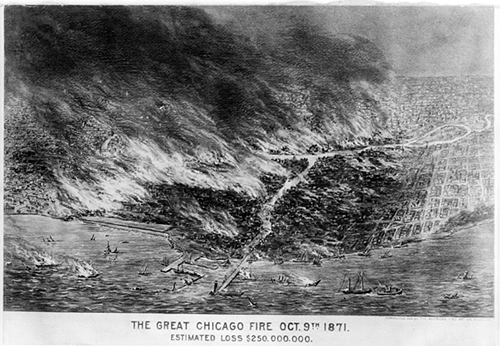
Chicago has had its share of fires. Three that come to mind are the Great Chicago Fire in 1871, the Iroquois Theater Fire in 1903, and the Our Lady of Angels School Fire in 1958. All 3 are famous, and all are tragic. 

Perhaps the most famous fire to sweep an American city – and certainly the most infamous case of farm animal arson – the Great Chicago Fire claimed up to 300 lives in 1871. After starting in a barn on a particularly dry October night, the fire spread through the Windy City's unregulated wooden structures. It wreaked miles (and millions worth) of property damage.  The Great Chicago Fire was transformative for the city of Chicago, sparking political upheavals and restoration efforts that led to a population boom in the decades to come. Of course, it also changed the way we construct, insure, and regulate buildings – and not just in the city of Chicago. After the devastation of this historic event, City Council stepped up within a year to ban wooden building materials and require flame-resistant materials instead.[ii]  

 
Aftermath of Chicago Fire - 1871
Just a few decades after the city's Great Fire, Chicago suffered another fiery tragedy when the opulent Iroquois Theatre caught fire, with 602 people trapped inside. These mass casualties inspired federal and state overhauls of codes that affect public spaces, and these codes continue to govern our theatres and other entertainment and hospitality venues to this day. Like the "unsinkable" Titanic, the "fireproof" Iroquois Theatre proved to be anything but. Tragedy struck on December 30, 1903, when a stage light sparked and ignited a curtain during a packed performance of a play. Some exit doors opened inward, but the vast majority – 27 of 30 total exit doors – were blocked with curtains or locked with strange mechanisms. The audience panicked as many failed to escape, and nailed-off vents trapped the smoke and heat inside with them. [iii]

The Our Lady of Angels School Fire is known as the deadliest school fire in U.S. history, killing 87 children and 3 nuns. Survivors and family members of this tragic fire still mourn the loss of their loved ones 60+ years later.  If any good came out of this tragedy, it is the improvements made to school safety. Today, fire drills are a regular part of the school experience, allowing teachers and students to learn what the fire alarm sounds like and practice a safe exit. [iv] ,  [v]

In 1884, the Home Insurance Company Building, designed by William LeBaron Jenney, was the original site of the world's first skyscraper. It was ten stories tall with a steel skeleton, stone curtain walls, and an elevator. It was demolished in 1929 to make way for what would then become known as the Field Building. The Field building was erected by the estate of department store magnate Marshall Field. The 44-story building was designed by Graham, Anderson, Probst & White. Construction completed in 1935; 
135 Building - 1935
it was intended to be the largest office building in the Loop. It is considered to be the last true Art Deco skyscraper built in Chicago's Loop district. It was the last major building erected in Chicago before a lull in construction brought on by the Great Depression and the Second World War. On the fifth floor are 17 panels depicting Robert Cavelier de la Salle's exploration of the area. He is believed to have made camp at this location. Considered by some to be  Chicago's Empire State Building, the building was outfitted with mail chutes in the shape of the building and is crisscrossed by pedestrian bridges.   Eventually, the building would be known as the LaSalle Bank building or simply by its address, 135 South LaSalle. 
[vi] , [vii]  

I feel very fortunate that I have never had to escape a burning building. However, I did experience a close encounter. Back in 2004, I worked on the 14th floor of the LaSalle Bank Building located in the heart of Chicago's financial district. It was December 6, 2004, about 5:45 pm… forty-five minutes past my standard quitting time. I was going to stay longer, but I was tired and decided it was time to go home, have some dinner, and relax on the sofa. I got in about 6:30 pm.  Thirty minutes later, I received a phone call from a friend of mine, checking to make sure I made it home alright. I was confused. I asked her why she thought I wouldn't have made it home? She said, "turn on the news."  

A fire had broken out on the 29th floor of the 44-story building. The building was in the process of putting in infrastructure for sprinklers at the time of the fire, but on the night of the blaze, there were no sprinklers on the 29th floor. The fire was reported about 6:30pm and continued to burn until midnight. The stubborn blaze shot flames out of the windows of the beautiful art-deco designed building along with thick, black smoke. The intense heat from the inferno caused window frames between the 29th and 30th floors to twist. Over 300 firefighters responded to the fire. In all, about 37 people sustained injury, mostly firefighters due to smoke inhalation. However, several suffered minor to serious injuries according to news reports at the time. Fortunately, there were no fatalities. Bank employees had recently participated in a safety drill, about a month or so earlier. Those individuals still in the building knew what to do. [viii]  Firefighters found everyone and led them out of the building to safety. It's important to note that none of the stairwells were locked, and fire alarm announcements provided clear and concise instructions. 

A few days before Christmas, employees were allowed back in the building on the lower floors. The upper floors remained closed for weeks. The acrid smell from the fire still hung in the air, but lessened each day. Fire and safety inspectors had gone through each floor of the building to identify the cause. Eventually, it was determined that the root of the fire was faulty wiring.  Space heaters that some people had under their desks were piled up in the middle of the floor. I found sooty boot prints from the firefighters on top of my desk as they used it as a way of accessing the windows to repel down the side of the building. They stood on the wedding cake-like tiers of the building's design to gain better access to the flames with their hoses.

I don't know how I would have reacted had I been in the building at the time of the fire. I like to think that I would have stayed calm, followed instructions, and made a safe exit out of there, but I'm glad that I never had to find out.

I have attached a couple of documentary videos below on two of the fires related to this post. Both are interesting, as well as very sad. They're approximately 10 minutes or less in length, but very informative.


 RESOURCES

Friday, March 13, 2020

FAVORITE FAMILY RECIPES… A POEM FOR THE SENSES

What does the word popular mean? Is it something familiar, every day, ordinary, or readily accepted by everyone {i.e., popular opinion or a name]? Yes, it is. Is it a person that is well-liked? Yes, it is. The word is often used as part of specific phrases: 'back by popular demand,' 'contrary to popular opinion or belief.'  There are magazine titles that use the word to catch the eye of potential subscribers (think "Popular Mechanics” or “Popular Woodworking”). Even our presidential election has a 'popular vote' versus that of an 'electoral vote.' Whatever the word means to you, the implication behind it invokes something positive, and what's more positive or popular…than food?!

I have never met a person that did not love or at least enjoy Italian food… well, I did once, but we don't speak anymore. It is one of the most popular cuisines in the world and when asked…it is often touted as a favorite amongst people of all ages and ethnicities. The most obvious reason is that it's delicious. It's beautiful to look at, smells divine, and it's delicious... [did I already say that? Well, it bears repeating].

Italian cooking is a poem for the senses. It is not just pizza or spaghetti, although that's pretty tasty. It's steeped in family history. Recipes handed down with pride from grandmothers and mothers to their daughters. It's not unusual to look further back than a couple of generations: to learn why we cook in a certain way and why we eat certain things.[1] Whole dialogs have been known to center around a particular recipe. Most of which are based on oral conversations with our elders, and therefore have a limited lifespan. Consider yourself fortunate if you find the recipe written down anywhere, like the blank pages inside a cookbook that you rarely open. That's where I found my family’s homemade ravioli recipe. It was actually more of a list of ingredients with the notation "to taste" written next to each one.

Cuisine…even the word sounds delicious. It's a style of cooking characterized by distinctive ingredients, techniques, and dishes. It's usually associated with a specific culture or geographic region. It can be as much a part of an individual's history as any known ancestor.  

Italian cuisine has a history as rich, colorful, and fascinating as the most amazing of recipes. It's no secret that the Roman Empire loved to feast, and their banquets were often representative of the various lands that it conquered. Exotic spices and ingredients from the Middle East, fish from the Mediterranean, and grains from North Africa. Of course, these were meals prepared for high society. The majority of the population's diet consisted of mainly three things and products made from them:  the vine, the olive, and cereal grains. The Mediterranean Diet is a popular trend in eating today and is based upon this diet. It is also considered and recommended as one of the healthiest diets around.  Wine, olive oil, and bread. Add a few healthy helpings of vegetables, legumes, and cheese, and this is what the people of Rome would eat daily.

Spices and dried fruit became a popular blend in the Middle Ages and are often still found in Sicilian dishes. Dried pasta is generally characterized as an Italian thing but was brought to Sicily by the Arabs. They appreciated the fact that it was easy to carry and preserve on long sea voyages. From the shores of Sicily, dried pasta made its way to Naples and Genoa, as well as France and Spain. So, contrary to what we hear about the origins of pasta, it wasn't Marco Polo that brought noodles to the Italian shores. [2]
   
Three of the most popular homemade dishes in my family center around pasta. Lasagna, ravioli, and my personal favorite… Zuppa di Pollo (chicken soup). There's nothing so comforting as a big, steaming bowl of this simple chicken broth and orzo pasta, sprinkled with freshly grated parmesan cheese, and topped with a sprig of fresh parsley or dried parsley flakes. Serve it with a piece of hot Italian bread dipped in olive oil and grated cheese or slathered in butter. Well, maybe go easy on the butter or the slathering, and you will have a cure for whatever is ailing you. 

It cannot be denied that Italian cuisine (or as it is referred to in Italy… "food") offers some of the most popular and tasty dishes imaginable. From bruschetta, pizza, pesto, pasta alla carbonara, and cannelloni to espresso, cappuccino, cannoli, and tiramisu… the popularity of these fantastic dishes is hard to beat. So, what are you waiting for?  Mangiamo! (Let's eat!)


[3] Pasta Shapes


RESOURCES:

[1] The History of Italian Cuisine I - Life in Italy. https://www.lifeinitaly.com/history-of-food/the-history-of-italian-cuisine-i

[2] The History of Italian Cuisine I - Life in Italy. https://www.lifeinitaly.com/history-of-food/the-history-of-italian-cuisine-i

[3] Pasta Shapes.  https://www.huffpost.com/entry/pasta-shapes-deathmatch_n_3416286?guccounter=1


Featured Post

Just a Spoonful of Pudding Helps the Clothing Bills Go Up

When I was growing up, family outings rarely left Illinois—just the occasional border hop into Wisconsin or Indiana. A day at the Dunes or t...